Sensory Analyst – the science of taste and smell
A Sensory Analyst uses scientific methods to evaluate how products taste, smell, look, feel and even sound. Their work ensures that flavours deliver the right sensory experience for consumers, whether that’s matching an existing product profile or testing an innovative new recipe.
In this role, you’ll combine an analytical mindset with a finely tuned sensory perception. Sensory analysts work closely with flavourists, product developers and quality teams to measure and interpret how products are perceived.
Typical tasks include:
• Designing and running sensory tests (e.g. blind tastings, descriptive profiling, preference tests)
• Recruiting, training and managing tasting panels
• Collecting and analysing data to guide product development decisions
• Maintaining controlled testing environments to ensure accurate results

Career path
Sensory analysis can be a standalone career or a stepping stone to roles in flavour creation, product development, or quality assurance. Career progression often looks like:
• Sensory Technician / Assistant – Preparing samples, assisting with test sessions and recording panel feedback.
• Sensory Analyst / Scientist – Designing test protocols, analysing results and working closely with development teams to guide decision-making.
• Senior Sensory Scientist / Sensory Manager – Leading the sensory programme, training panels, mentoring junior staff and collaborating on high-profile product launches.
Some sensory analysts specialise in a particular product category (e.g. beverages, dairy, confectionery) or testing method, while others work across a wide range of foods and beverages.
What qualifications help?
A background in science, particularly Food Science, Sensory Science, Psychology or Biological Sciences, is highly valuable. Degrees in these fields often include training in experimental design, data analysis and sensory evaluation methods.
Several UK universities, including Nottingham, Reading and Leeds, offer undergraduate and postgraduate courses with strong sensory science components.
For those looking to specialise further, postgraduate programmes such as the MSc in Sensory Science at the University of Nottingham provide in-depth expertise in sensory evaluation and consumer research.
As with many roles in the flavour industry, in-house training is common. Companies often provide sensory-specific training, from learning how to run a triangle test to developing the ability to detect subtle flavour differences.
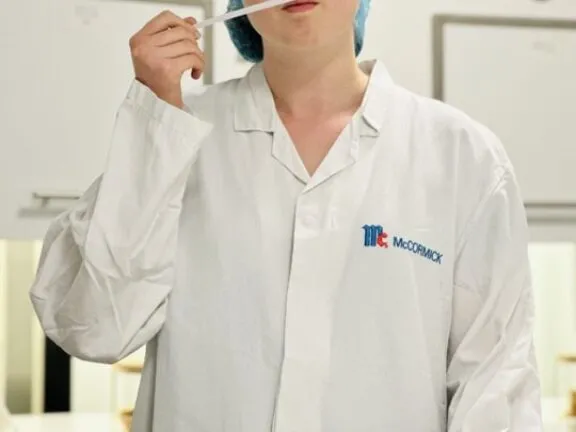
Real-world insight
Discover what a career in sensory analysis involves in our case study with Hannah Stodart from McCormick & Company, and learn how sensory science helps shape the flavours we enjoy every day.