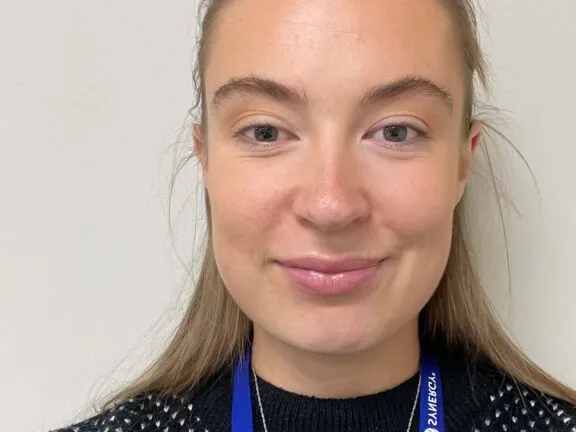
Meet Emma Davies
“Seeing a list of compounds turn into a real flavour is incredible – it’s science coming to life.”
- Job Title: Flavour Research Analyst
- Company: Synergy Flavours
- Degree: BSc Natural Sciences (Major Chemistry, Minor Food Science), University of Leeds
When Plans Change
Emma Davies didn’t grow up imagining a career in the flavour industry. In fact, her early dream was to become a dancer. She kept dancing as a hobby, but when it came to choosing a career, she wasn’t sure what direction to take.
Rather than commit to a single discipline, she chose Natural Sciences because it offered flexibility.
“I didn’t want to hone in too much on one subject. Natural Sciences gave me options and I could tailor it as I went.”
She began with three pathways: Chemistry, Food Science and Biochemistry. By second year, she had dropped Biochemistry and continued a more even split between Chemistry and Food Science.
But it was her placement year that changed everything.
Finding Her Path at Synergy
Emma wasn’t initially set on analytical chemistry or the flavour industry. She explored new product development roles and even received an offer in process technology, but something didn’t feel right.
Then she came across a placement at Synergy Flavours.
“I didn’t fully know what the role was when I applied, but the more I learnt about it, the more I wanted it.”
During the interview process she found herself hoping Synergy would offer her the position. When they did, she accepted immediately.
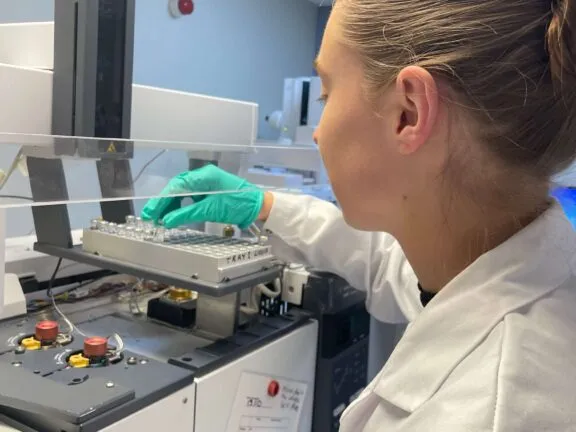
Her placement, split between analytical chemistry and sensory science, reignited her passion for chemistry.
“I’d lost the spark for chemistry a bit at uni. Doing my placement year at Synergy brought it back.”
The experience was transformative: it not only clarified her career direction, it shaped her degree choices when she returned to university.
Returning to Synergy
Emma loved the analytical side of her placement, and when a role opened at Synergy during her final year at university, Emma applied, knowing that opportunities in analytical flavour research don’t come up often.
“I knew I’d enjoy coming back. I’d applied for other jobs, but this was the one I really wanted.”
She returned as a Flavour Research Analyst, joining a team working at the intersection of chemistry, flavour creation and innovation.
What Does a Flavour Research Analyst Do?
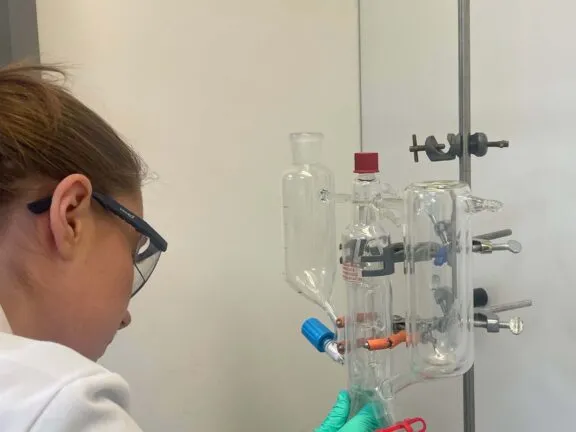
Emma’s main role involves:
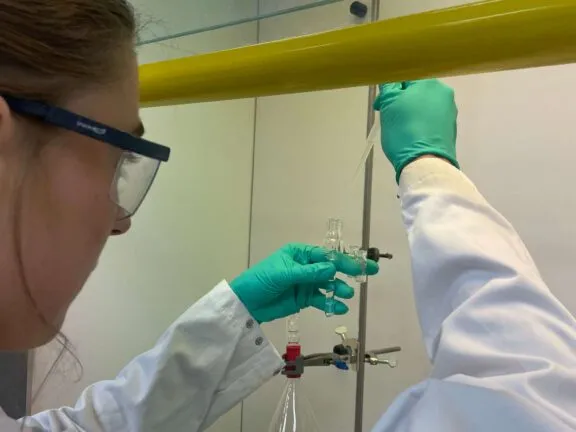
- Extracting flavours using organic solvents
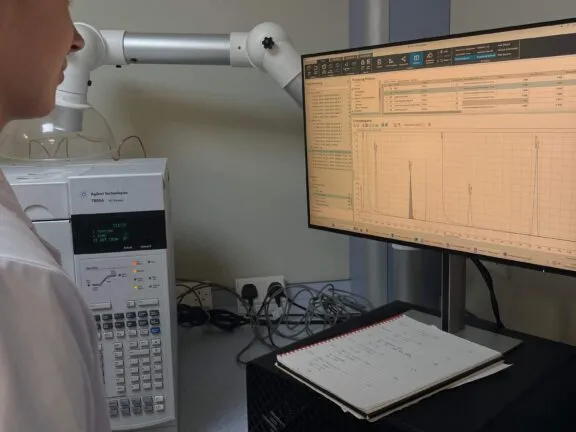
- Running samples on GC-MS (Gas Chromatography–Mass Spectrometry) and GC-FID (Gas Chromatography-Flame Ionization Detector)
- Interpreting chromatographs and mass spectra
- Identifying and quantifying flavour compounds
- Producing detailed analytical reports for flavourists
- Collaborating with flavourists to discuss findings and guide formulation
- Supporting research projects and method development
- Tracking emerging flavours and improving analytical techniques
The Joy of Seeing Chemistry Become Flavour
Emma’s work centres around understanding flavours at a molecular level.
It’s a blend of routine analysis and exploratory research work.
“We take a flavour apart molecule by molecule, identify everything we can and give the flavourists a report they can use to match it.”
A typical day involves time in the lab, data analysis and project work. Some weeks are heavy with flavour matching requests; others allow more freedom for research and innovation.
For Emma, the most rewarding part of the job is seeing the tangible results of her analysis.
“It’s amazing to see this list of compounds turn into a strawberry flavour. It shows the work isn’t just data – it becomes something real.”
Flavourists often return with the final flavour created from Emma’s analysis, giving her a chance to experience the full story: from data to sensory reality.
Developing Skills in a Unique Field
Analytical Chemistry
Emma has gained significant experience in problem-solving.
“There’s always something that doesn’t go to plan. You learn how to adapt, how to troubleshoot, how to know what will and won’t work.”
Learning from senior analysts has been key to developing this intuition.
Data Analysis
Working with complex datasets has sharpened her attention to detail.
She’s learned to use visual tools to simplify dense numerical data and spot the most meaningful patterns.
Sensory Understanding
Although not a sensory specialist, Emma participates in tasting panels and compound familiarisation sessions to build her sensory vocabulary.
“It’s fascinating. You get exposed to different compounds and start learning the terminology flavourists use.”
The Impact of a Placement Year
Emma strongly recommends completing a placement.
“It changed the path of my degree and my career. Without it, I’d be in a completely different role now.”
The experience helped her discover what she truly enjoyed and what she didn’t, giving her confidence in her direction.
Could Analytical Flavour Research Be Your Future?
Emma’s story shows that you don’t need to know your dream job from day one. Curiosity, flexibility and hands-on experience can open doors to unexpected, exciting careers.
For those who enjoy chemistry, problem-solving and seeing their work have a real impact on food and drink products, analytical flavour science offers a unique and rewarding path.
If you want to learn more about careers in flavour, from analytical chemistry to sensory science and flavour creation, then the flavour industry might just have a place for you.