Flavourist – part chemist, part artist
Flavourists are the creative scientists behind the tastes we love. Combining a deep understanding of chemistry and food technology with a finely tuned sense of smell and taste, they create new and exciting flavours for foods, drinks and other products.
While strong technical knowledge is essential, being a flavourist is as much an art as a science as it requires imagination, curiosity and a passion for crafting unique taste experiences.
This is a career of lifelong learning and discovery. Flavourists continuously explore new ingredients, technologies and trends, making the possibilities endless.
Career path
Most companies have a structured career pathway for flavourists:
- Junior Flavourist – Supporting senior colleagues, learning the fundamentals of flavour creation, working on simpler briefs and developing your sensory skills.
- Flavourist – Taking responsibility for your own projects, developing and refining flavour formulas and working closely with clients or product developers.
- Senior Flavourist – Leading major projects, mentoring junior colleagues and pushing the boundaries of innovation in flavour creation.
Progression depends on experience, skill, and a willingness to keep developing your craft.
What qualifications help?
There is no single path to becoming a flavourist, but most start with an undergraduate degree in Chemistry, Food Science or a related discipline. A solid grounding in science is essential and you’ll develop your understanding of flavour through specialised training and hands-on experience in the industry.
Many flavour companies offer in-house training academies with structured programmes that take you from Trainee Flavourist to fully qualified Flavourist. These provide a mix of practical lab work, sensory training and flavour formulation experience. Such opportunities are often advertised on company career pages.
Specialist external training can also enhance your knowledge at various stages of your career:
- The Grasse Institute of Perfumery – Courses for aspiring flavourist assistants, perfumer assistants and related roles, including preparation for production and sensory evaluation.
- Giract – Promotes flavour research among PhD students in Europe, offering six first-year bursaries and a best thesis prize (deadline for 2025/26 awards: 31 October 2025).
- ISIPCA (Versailles, France) – Training for a range of flavour industry careers, including a one-year programme in flavour formulation and applications (with a six-month placement) and a Summer School in the Art of Food Flavouring. Training is delivered in English.
While these programmes are respected in the industry, they are not essential to becoming a flavourist and many professionals build rewarding careers through company training and industry experience alone.
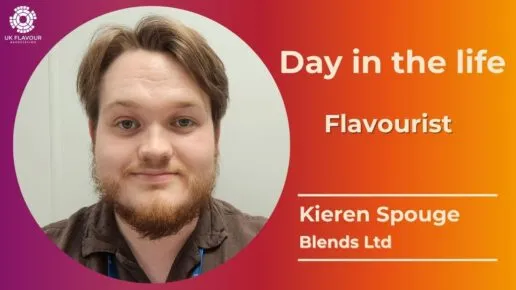
Case Study: Becoming a Flavourist – Kieren’s Journey into Taste
To see what life as a flavourist is really like, read our Case Study: Kieren Spouge of Blends and watch our video interview with Kieren, where he shares what a day in the life of a flavourist looks like.