Quality Control & Process – ensuring consistency and safety
Quality Control (QC) and process roles ensure that every flavour product meets the highest standards of safety, legality and consistency, from raw materials through to finished goods.
Working in QC and process means being detail-driven and methodical, with a strong understanding of both scientific principles and manufacturing procedures. These roles are vital to maintaining customer trust and brand reputation.
Typical responsibilities include:
• Testing raw materials, intermediates and finished products to ensure they meet specifications
• Monitoring production processes to maintain consistency and efficiency
• Calibrating and maintaining laboratory and production equipment
• Investigating and resolving quality issues, working closely with production and regulatory teams
• Recording and reporting results in line with quality management systems

Career path
Career progression in quality and process often follows:
• QC Technician / Process Operator – Carrying out routine testing, following set procedures and maintaining records.
• QC Analyst / Process Technologist – Investigating deviations, optimising processes, and supporting new product trials.
• Quality / Process Manager – Leading the QC function, implementing quality systems, training staff and driving continuous improvement.
Some professionals specialise in laboratory-based QC, while others focus on process engineering or quality systems management.
What qualifications help?
A degree or diploma in Food Science, Chemistry, Microbiology, or Engineering provides an excellent foundation for QC and process roles. For more hands-on production-focused roles, vocational qualifications in food manufacturing, process engineering or laboratory operations are also relevant.
Many companies offer in-house training in their quality systems and manufacturing processes, allowing you to build expertise specific to the flavour industry.
Relevant certifications, such as HACCP (Hazard Analysis and Critical Control Points) or ISO 9001 Quality Management Systems, can strengthen your skills and career prospects.
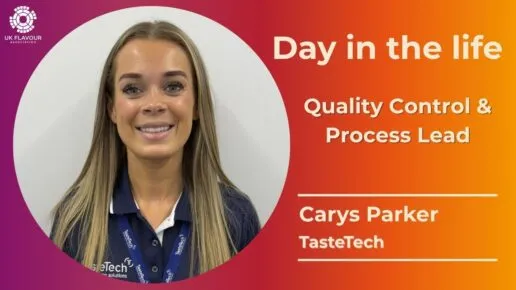
A day in the life of a Quality Control and Process Lead
Read our case study from Carys Parker, Quality Control and Process Lead at TasteTech, to see how QC and process teams work behind the scenes to keep flavour products safe, consistent and high-quality and discover the variety of career paths in this essential area of the flavour industry.