Sample Bay Operative – the organiser behind the flavour creation process
Sample Bay Operatives play a vital role in the flavour industry, ensuring that the right flavours reach the right people at the right time. They are the link between flavour creation, applications and customers – preparing, labelling and dispatching flavour samples for testing, trials and client presentations.
It’s a hands-on role that requires accuracy, organisation and attention to detail. Every day is different: one moment you might be measuring samples for a new soft drink project, the next managing stock in the flavour library or helping prepare samples for sensory evaluation.
Sample Bay Operatives work closely with Flavourists, Applications Technologists and Commercial teams, gaining valuable insight into how flavours are developed and used in real products. For many, it’s the perfect starting point for a career in the flavour industry.

Career path
Sample Bay roles are an excellent way to enter the industry and build experience across multiple departments. Progression often depends on your interests and the opportunities within your company, but a typical pathway might look like this:
• Sample Bay Technician/Operative – Managing the day-to-day preparation, organisation and documentation of flavour samples
• Senior Sample Technician / Sample Coordinator – Overseeing sample requests, mentoring new colleagues and liaising between departments
• Applications Technologist or Laboratory Technician – Moving into more technical roles that involve flavour testing, formulation and product trials
• Applications Manager or Flavourist – For those who pursue further training and hands-on experience, senior technical and creative roles are possible
What qualifications help?
There’s no single route into this career. Many Sample Bay Operatives join with GCSEs, A levels, or vocational qualifications such as BTECs or NVQs in Science, Food Technology, or a related subject.
While these qualifications are sufficient to start in the role, a degree in Food Science, Chemistry, or a related discipline can be valuable, as this role often provides a stepping stone into other technical or creative careers within the flavour industry.
Practical skills and the right attitude are often just as important as formal qualifications. Attention to detail, good record-keeping and confidence working in a lab or production environment will help you succeed.
As you gain experience, you may choose to complete further training in food science, flavour applications, or laboratory techniques and many companies support employees in developing their technical skills on the job.
Real-world insight
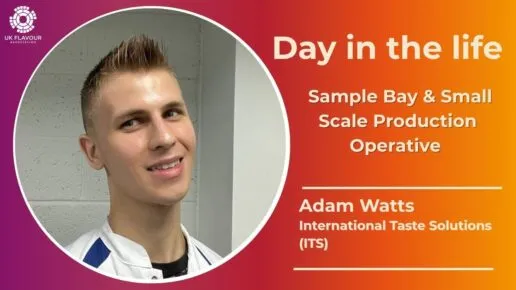
Discover what life as a Sample Bay & Small Scale Production Operative is really like in our case study and Day in the Life video with Adam Watts from International Taste Solutions (ITS), where he shares how this dynamic, hands-on role supports the entire flavour creation process.